Armstrong Clinic: Booking & Prescribing Platform
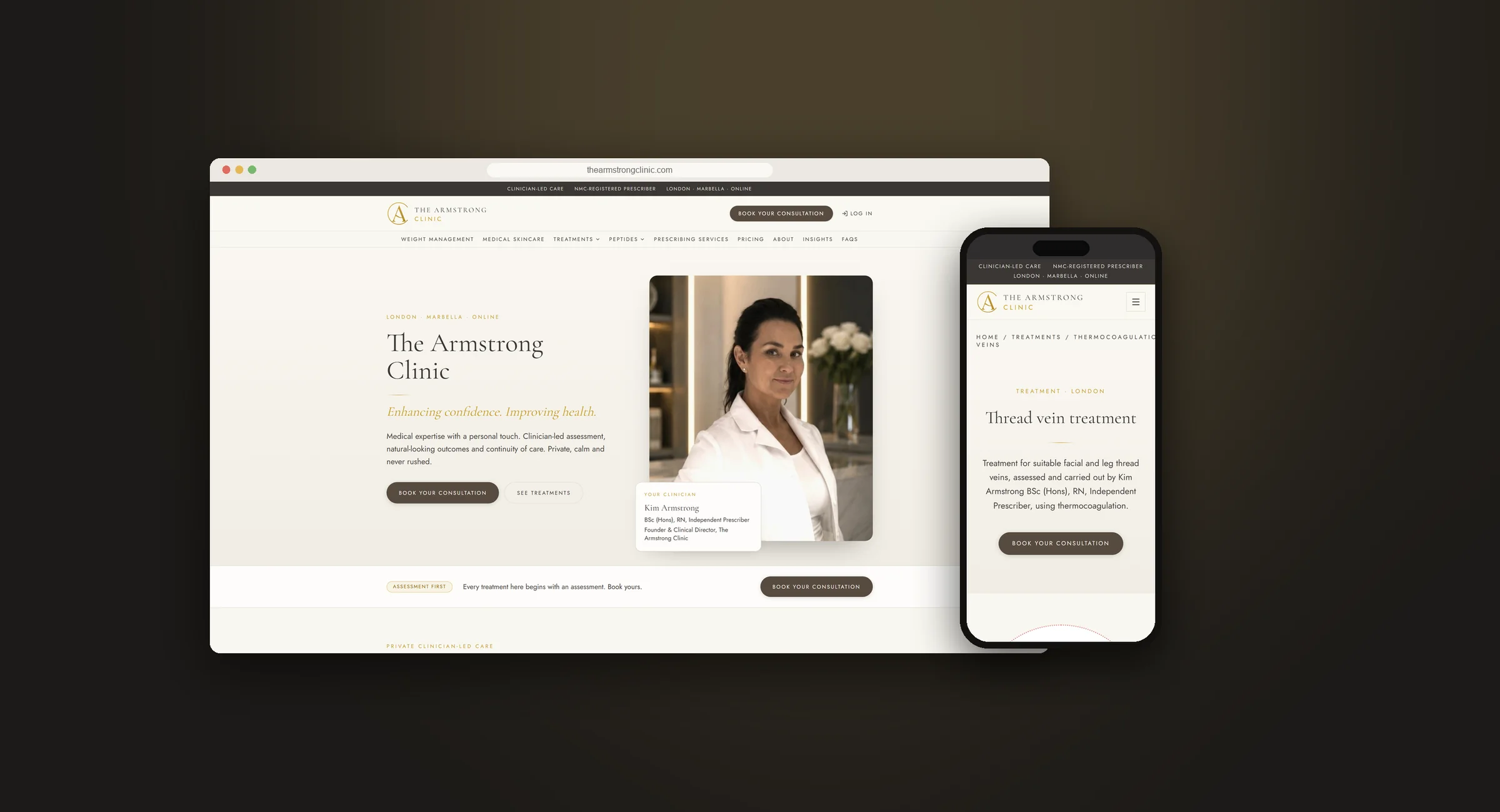

A private clinic's website, booking engine and clinical back office, engineered as one system.
How do you give a one-clinician practice the systems of a multi-site clinic, without losing what makes it personal?
Kim Armstrong is a registered nurse and Independent Prescriber, treating patients in London, in Marbella and online, and prescribing on behalf of other clinics. We built the platform her practice runs on: the public site, the bookings, the prescribing integration and every screen behind the login.
The problem
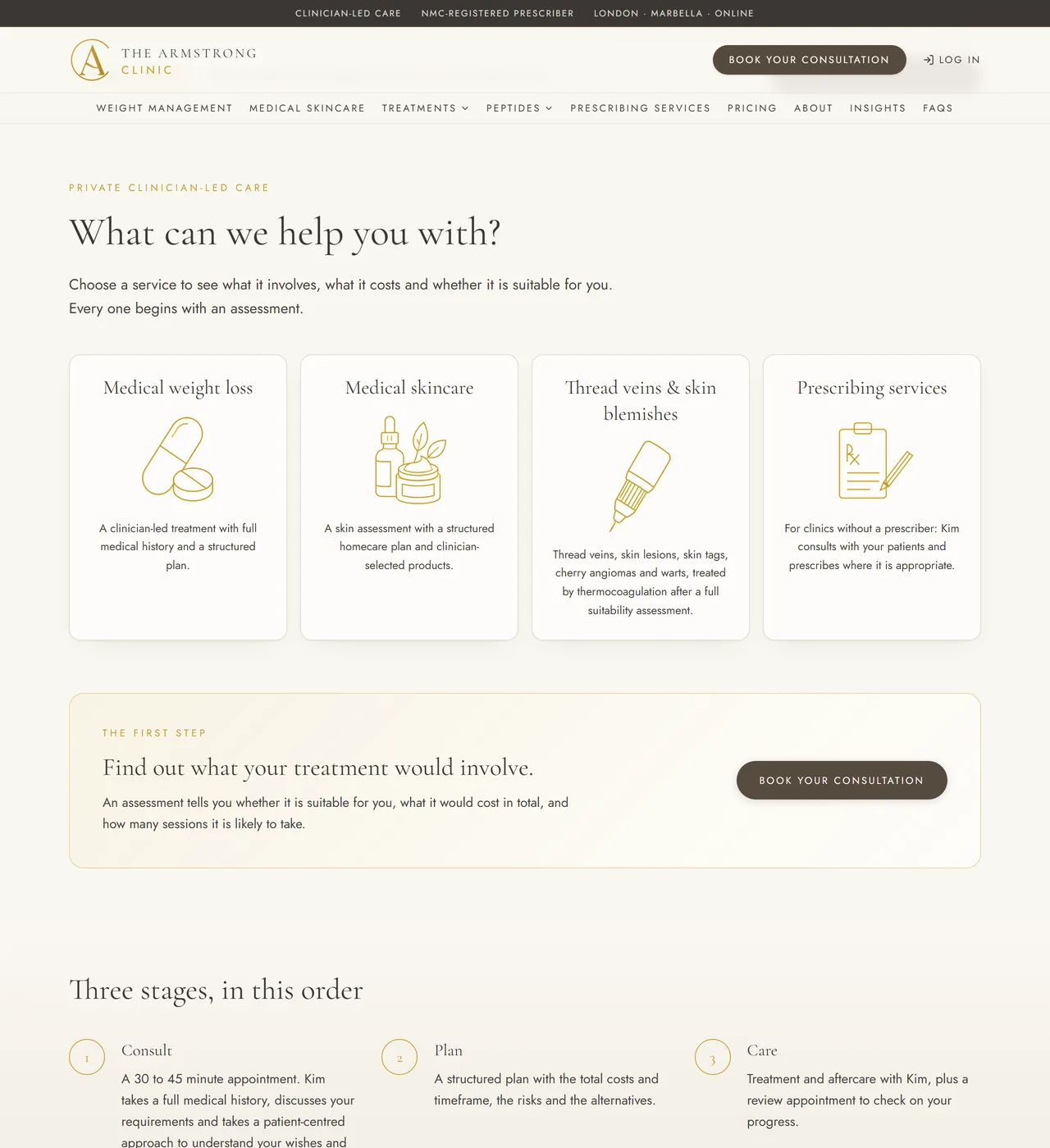
Four services, four entirely different patient journeys, and one clinician running all of them.
Most clinic websites are a brochure with a booking widget bolted on. That works when every treatment is booked the same way. Here, none of them were.
Thread veins and skin lesions need an online consultation, a clinical approval, and only then an in-person treatment slot.
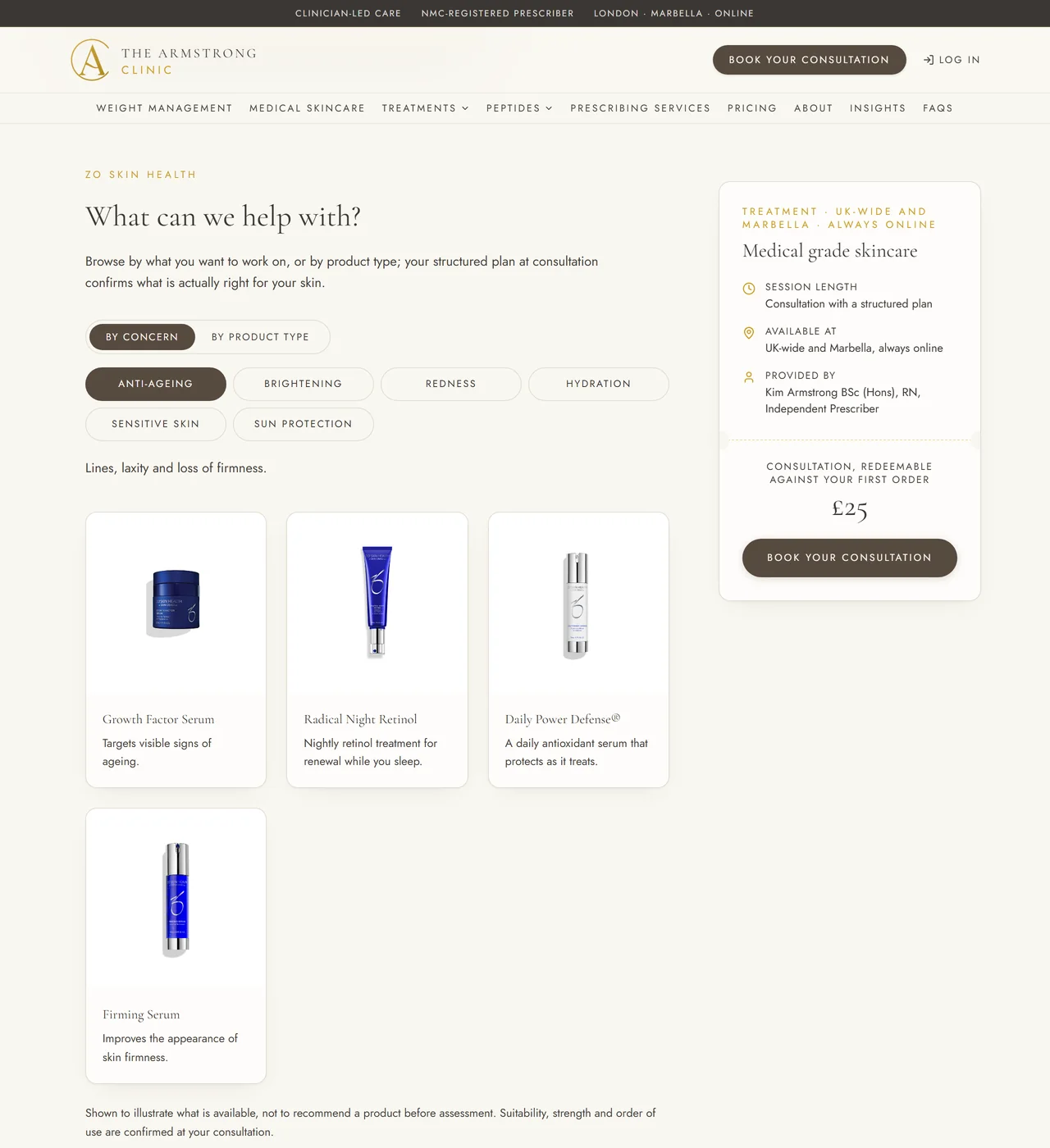
Medical skincare is consultation only, followed by a prescribed product plan the patient orders themselves.
Weight management runs through a regulated prescribing and pharmacy partner, OxygenRX, not through the clinic at all.
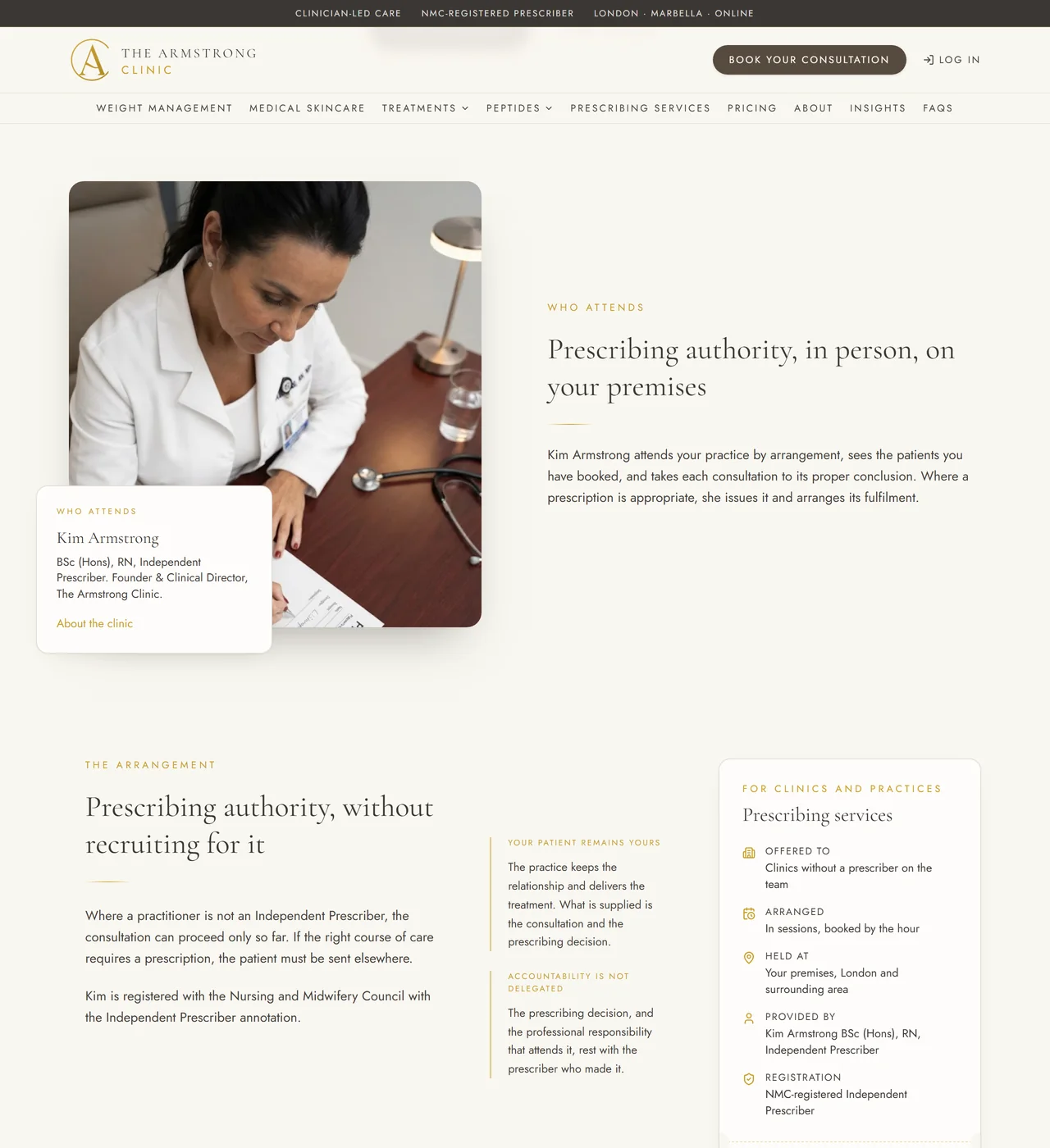
Prescribing services are sold to other practices, not patients, and happen on someone else's premises.
An off-the-shelf booking tool handles one of these well. The practice needed all four, sharing one diary and one clinician.
- 01Website Design and Art Direction
- 02Clinical Content and Local SEO
- 03Custom Booking Engine
- 04Patient Accounts and Magic-Link Sign-In
- 05OxygenRX Prescribing Integration
- 06Stripe Payments and Product Ordering
- 07Clinical Admin and Patient Records
- 08Partner Practice Portal
- 01Website Design and Art Direction
- 02Clinical Content and Local SEO
- 03Custom Booking Engine
- 04Patient Accounts and Magic-Link Sign-In
- 05OxygenRX Prescribing Integration
- 06Stripe Payments and Product Ordering
- 07Clinical Admin and Patient Records
- 08Partner Practice Portal
The website
Quiet luxury on the surface. Clinical honesty underneath.
The brand borrows from private members' clubs rather than aesthetics clinics. Warm cream, charcoal, a single muted gold, a high-contrast serif, and sharp edges where the category defaults to blush pink and rounded corners.
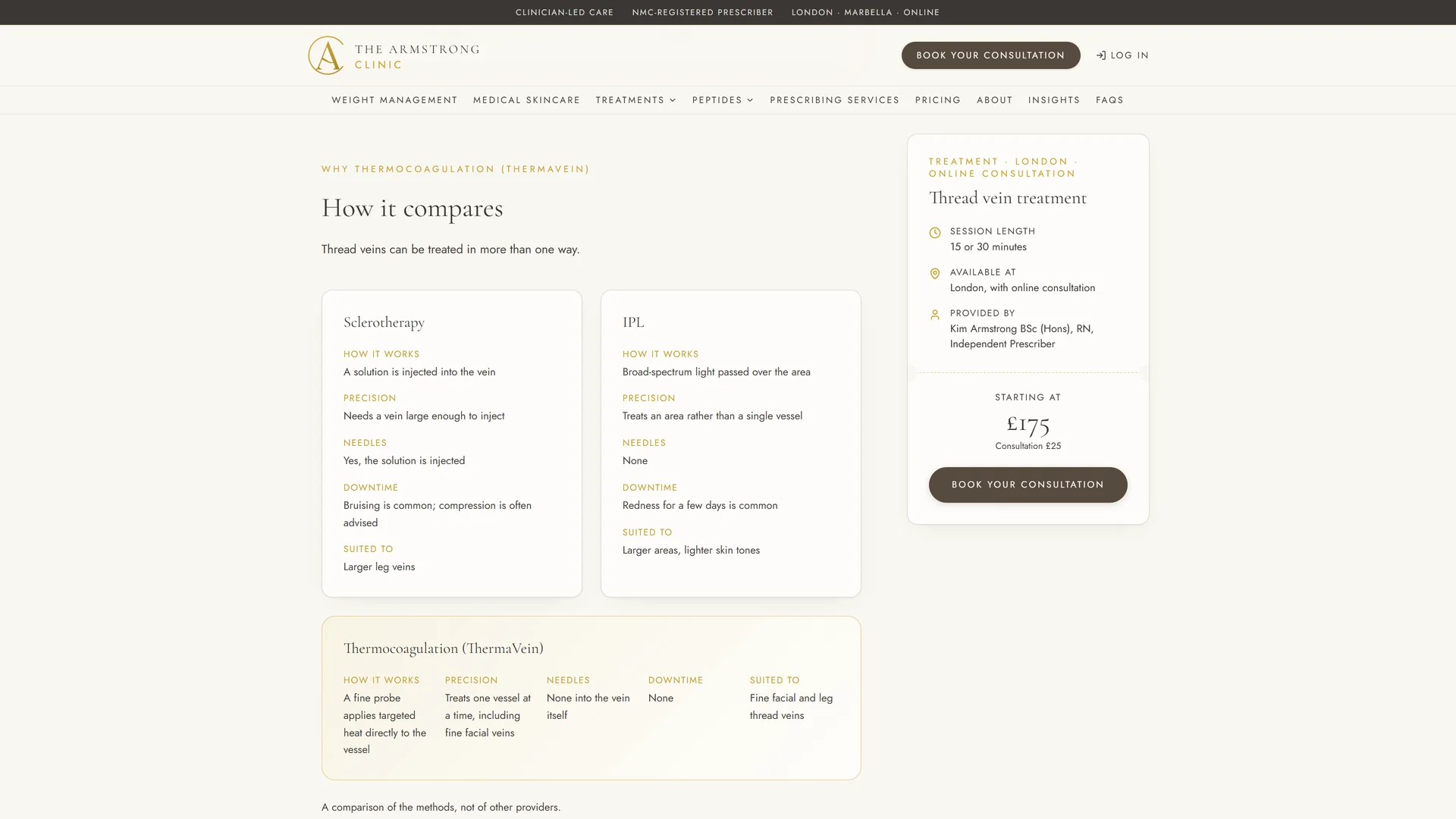
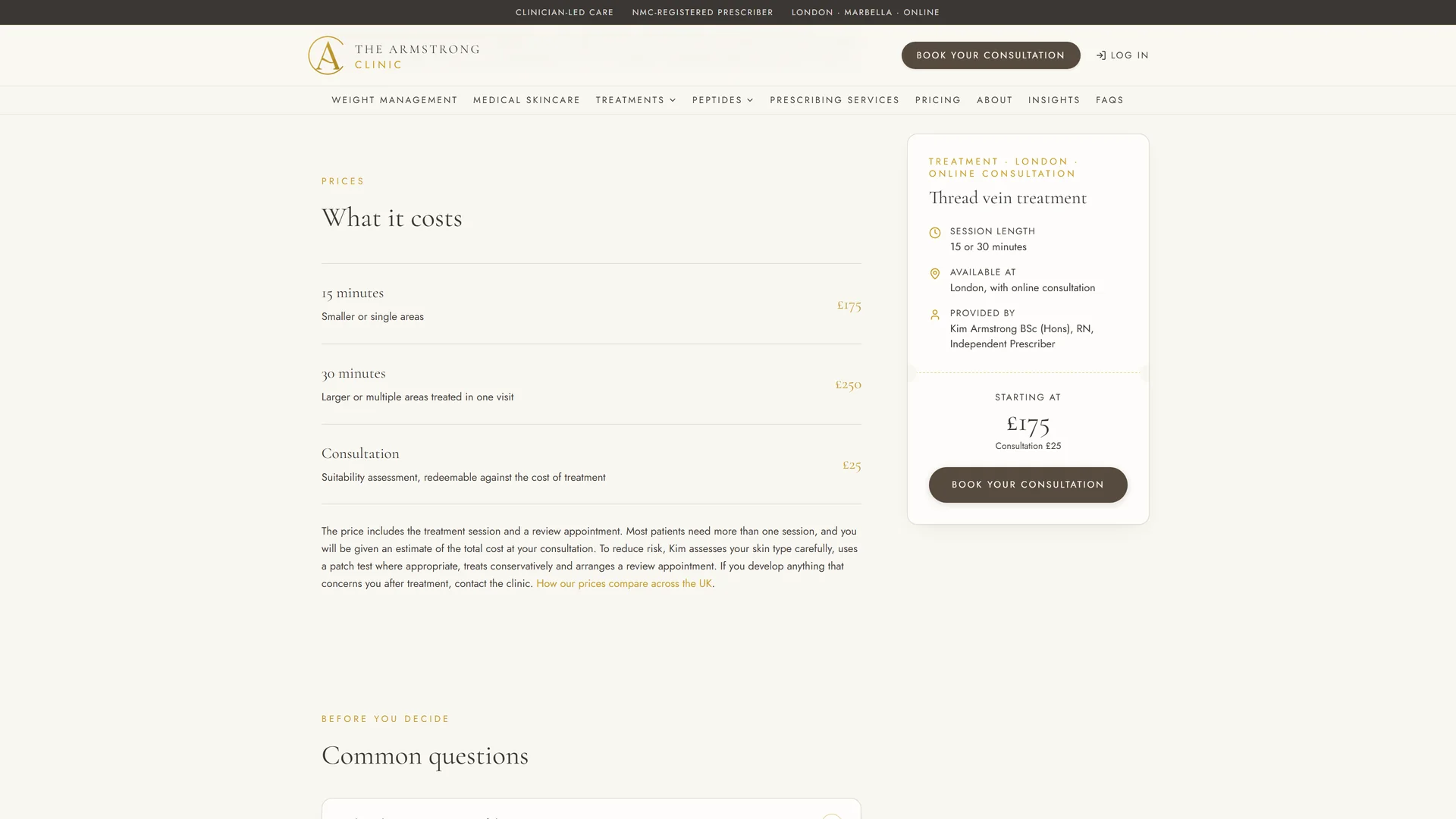
The content does the harder work. Every treatment page explains the condition, the mechanism, how the method compares with the alternatives, how many sessions it is likely to take, what to expect afterwards and every risk, stated in full. Genuine before and after images, the clinician's own videos, and published prices with the total cost confirmed at consultation, never afterwards.
Behind it sits a location and search structure built to be found: treatment pages, condition pages, London and Marbella landing pages and long-form guides, all generated with structured data and a live sitemap.
Custom bookings
A booking engine that knows a clinician cannot be in two places at once.
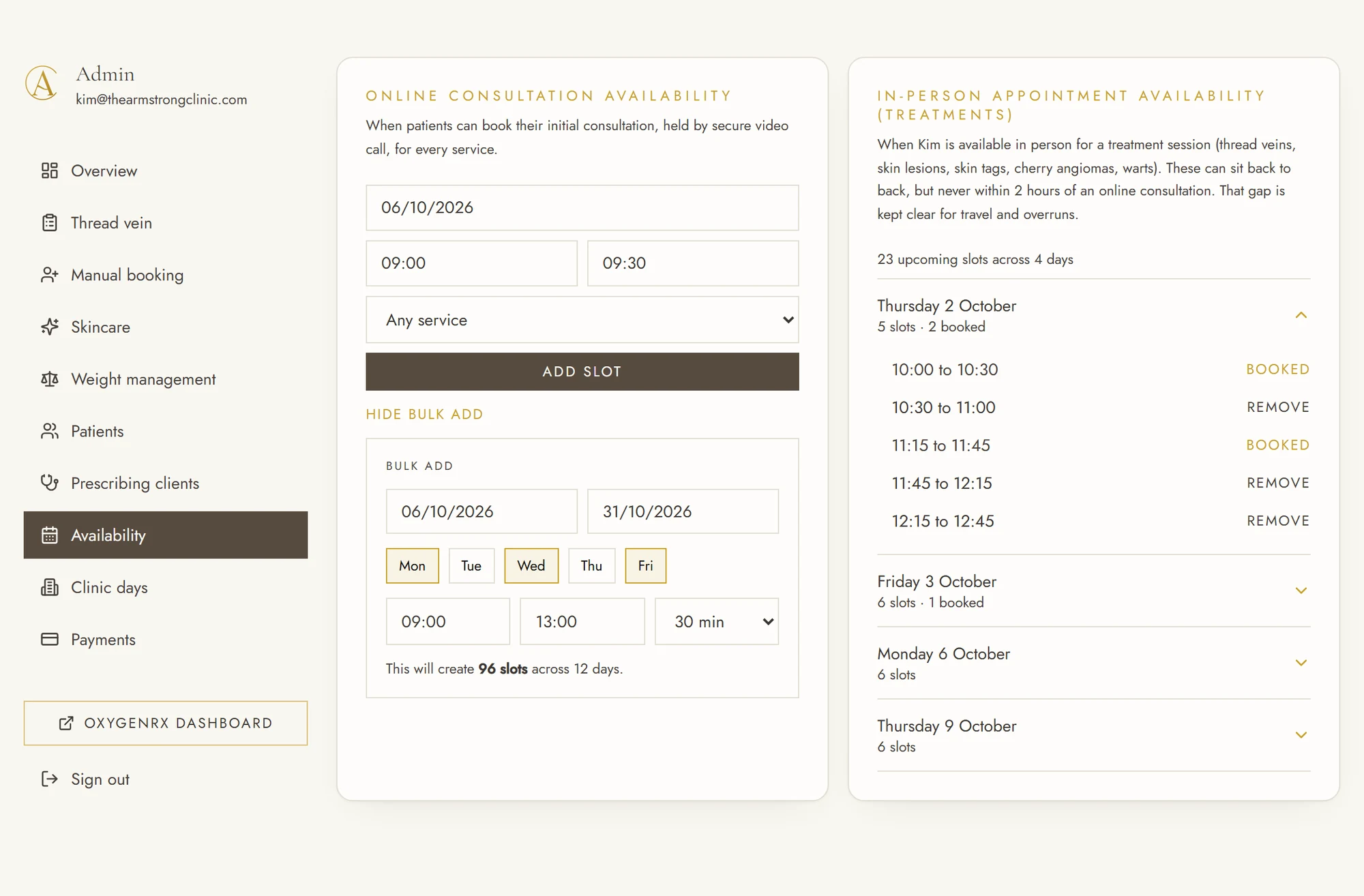
Kim works from two diaries: online video consultations, and in-person treatment sessions in London. Patients book against whichever the service needs, and the rules between them are the ones her day actually runs on. Two in-person appointments may sit back to back. An online consultation and an in-person treatment need two clear hours between them, in either order, for travel and for an appointment that runs over.
That rule is enforced by the database itself, inside a single transaction, at the moment a slot is claimed. Two patients booking within seconds of each other cannot both win, even when they are claiming different slots in different calendars.
A slot is held the instant a patient submits, released automatically after thirty minutes if they abandon payment, and a booking only exists once its consultation fee has cleared. There is nothing to reconcile. If it is in the admin panel, it was paid for.
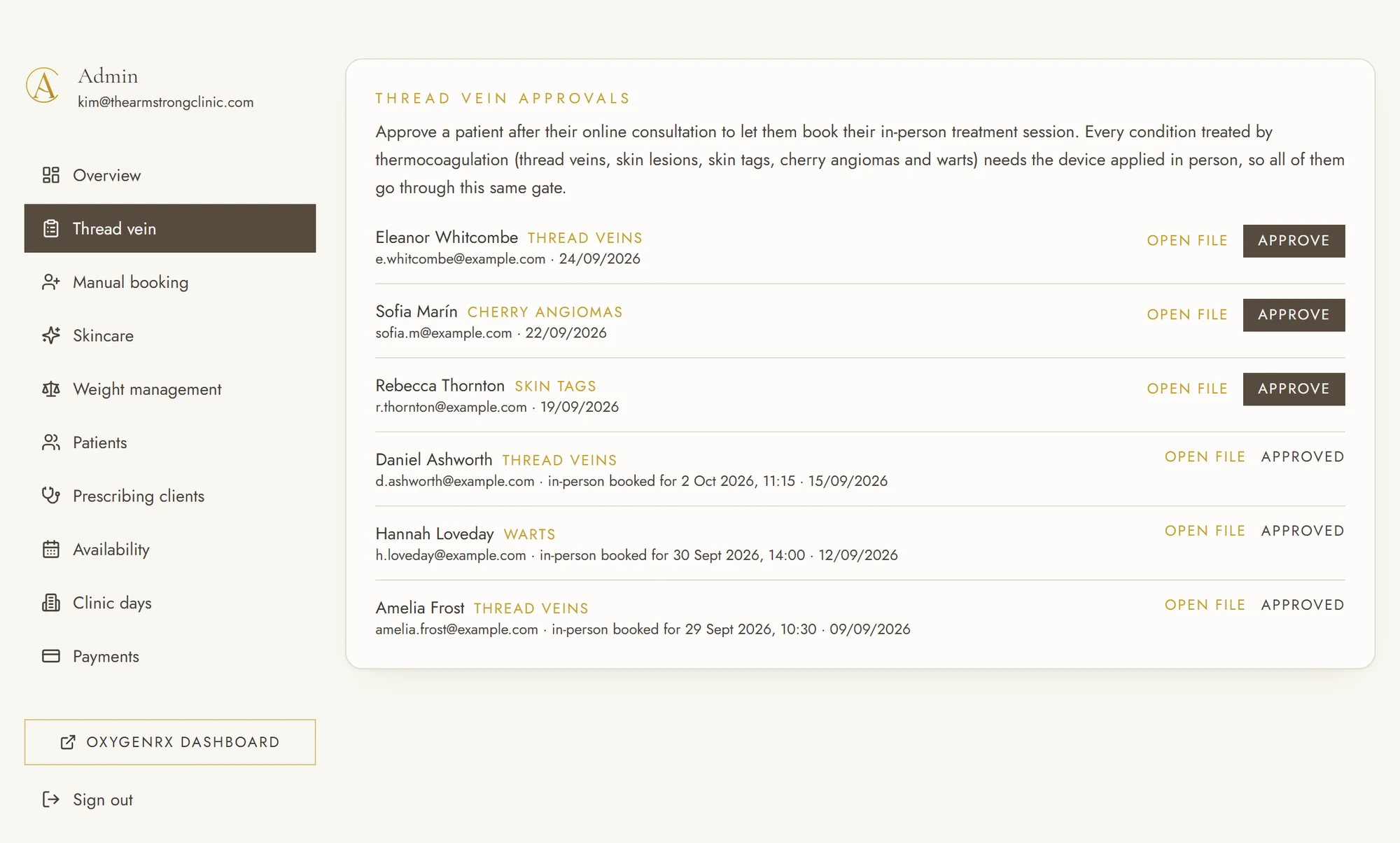
Thread vein patients are gated by clinical approval before they can choose an in-person slot. Patients cancel or reschedule their own appointments from their account, up to twenty-four hours before. Kim publishes availability a slot at a time or a month at a time, and the system tells her exactly how many slots a range will create before it creates them.
Prescribing integration
Nothing typed twice, and nothing prescribed on a guess.
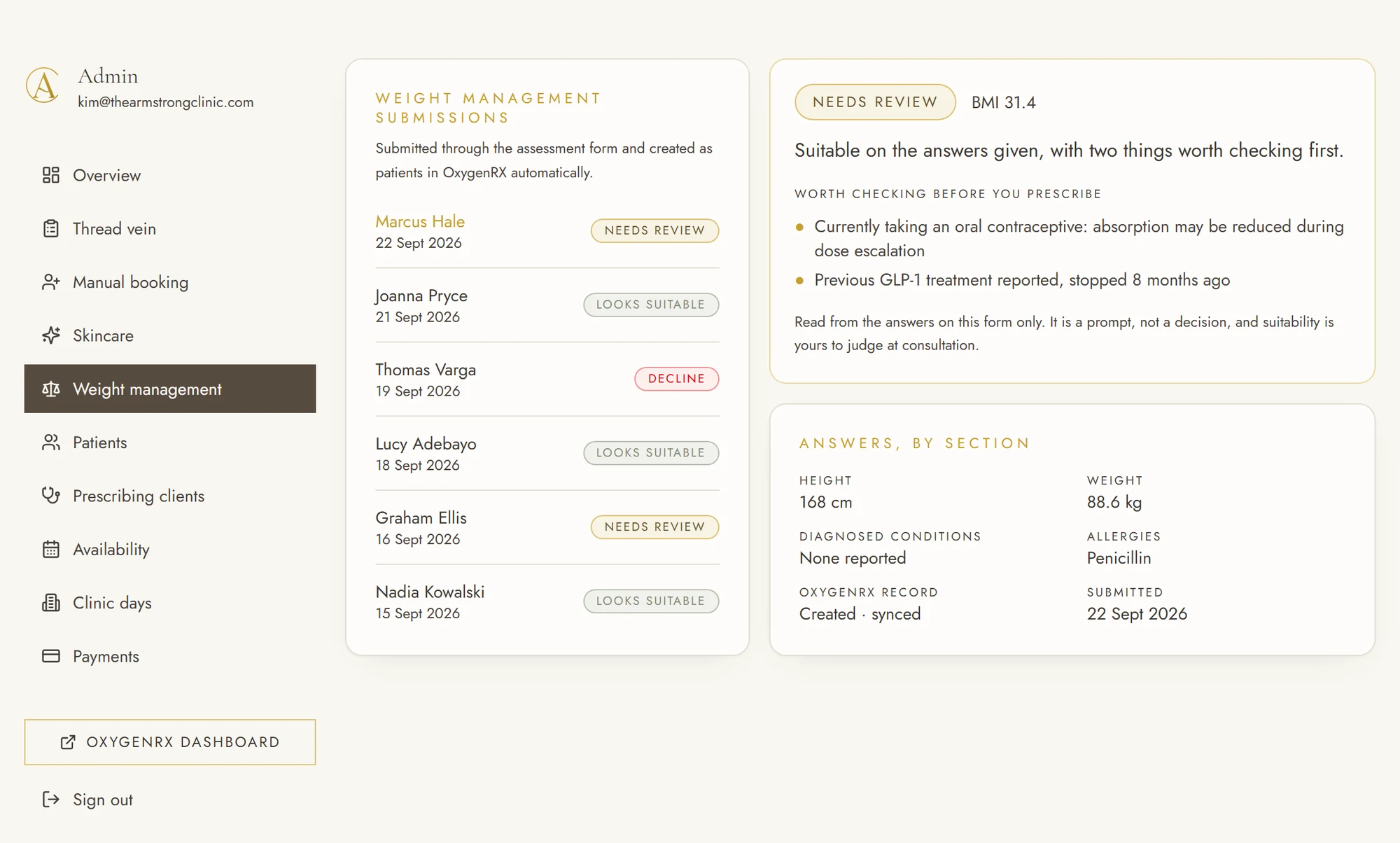
Medical weight management is delivered through OxygenRX, a regulated prescribing and pharmacy platform. The clinic's assessment form is fetched live from OxygenRX, and the moment a patient submits it, the platform finds or creates them as an OxygenRX patient, files their answers, and writes height, weight, BMI, medications, allergies, supplements and diagnosed conditions straight onto their clinical record.
Every submission arrives with a verdict: looks suitable, needs review, or decline, with every reason listed underneath. It is computed from the answers against the licensed contraindications, recomputed independently from the raw answers in case the form is ever edited upstream, and worded as a prompt rather than a decision, because the prescribing decision belongs to the prescriber.
The same care runs through the medical history. When a questionnaire was split in two, a hard stop on one form could no longer see an answer given on the other. The platform now reads the history's safety flags and raises any absolute contraindication before the consultation starts, so the clinician is not relying on a patient repeating themselves accurately.
From the admin panel Kim can browse every OxygenRX patient live, read their full record, run a questionnaire with a patient on the phone, or email them an identity check or a health questionnaire through a single-use link that expires in thirty days.
At a glance
4
services with four different patient journeys, running on one platform
182
automated tests guarding the booking, eligibility and payment rules
2hrs
between online and in-person appointments, guaranteed by the database itself
The partner portal
Prescribing services for other clinics, run like a product rather than a favour.
Plenty of aesthetics practices have no Independent Prescriber on the team. Kim attends their premises and prescribes where it is clinically appropriate. That used to mean emails, spreadsheets and patient lists retyped by hand.
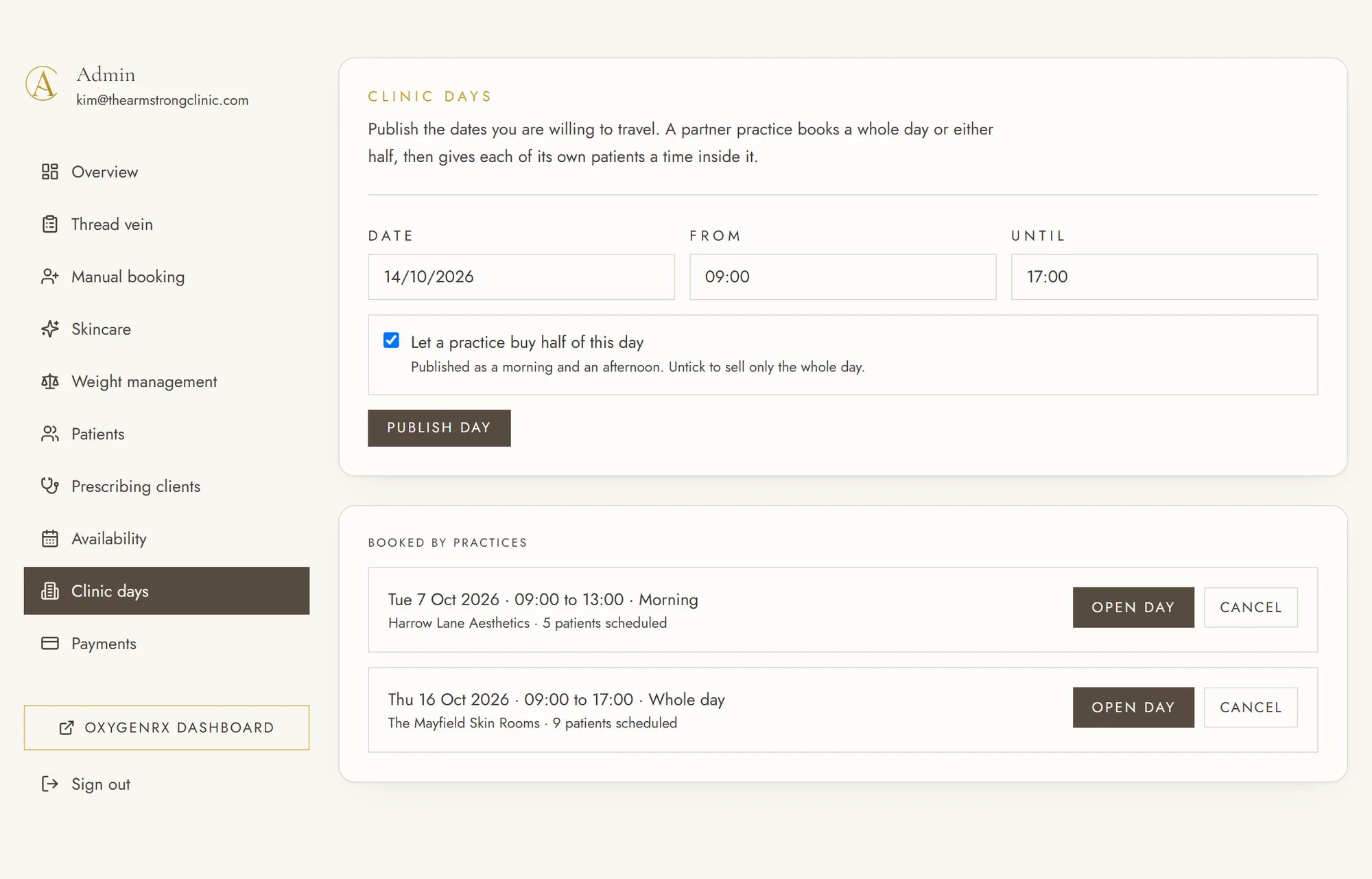
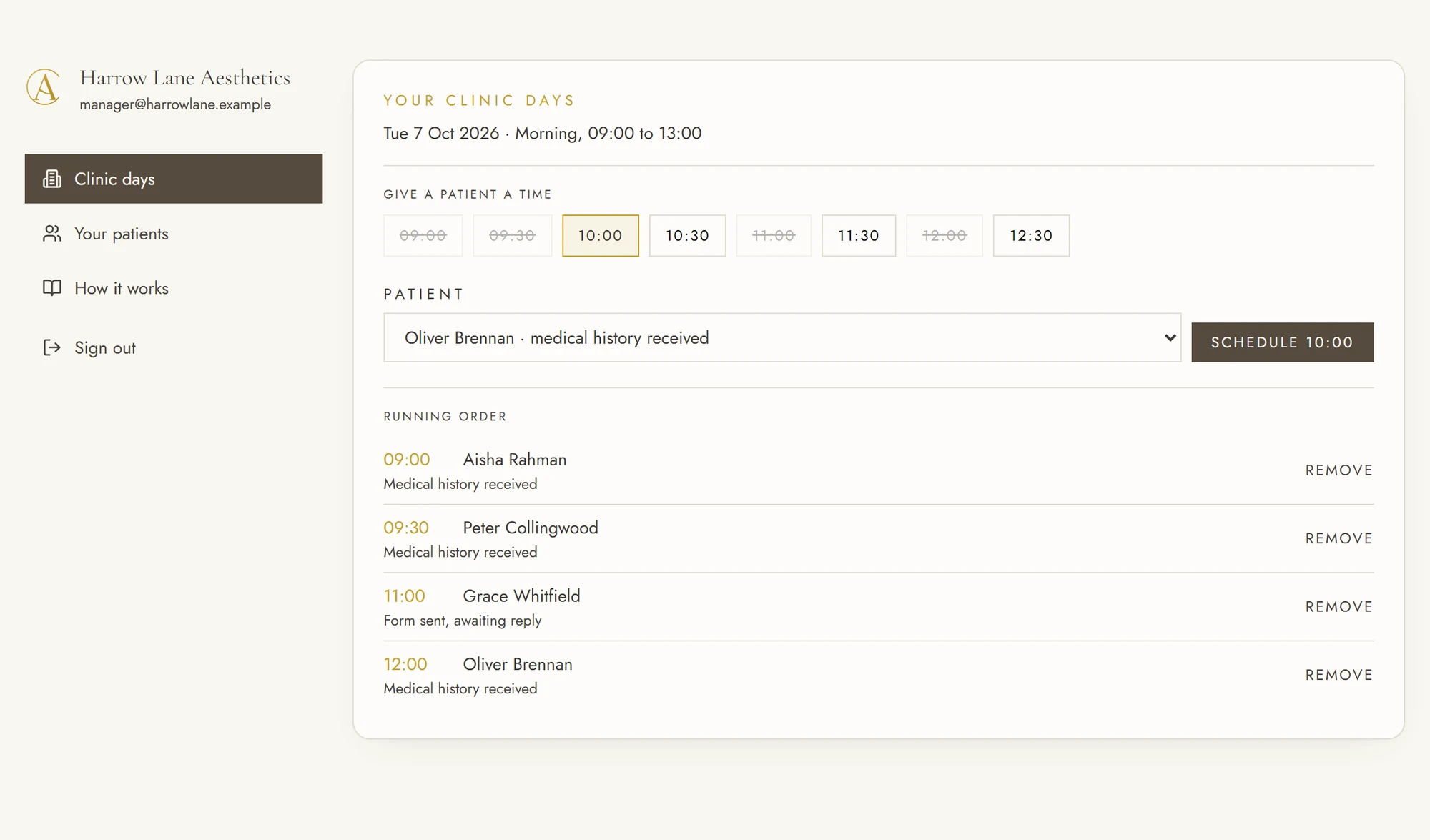
Now Kim publishes the days she is willing to travel, as a whole day or a morning and an afternoon. A practice signs in to its own portal, books a day, adds its patients, sends each one the medical history form ahead of the visit, and gives them a time. The database refuses to put two patients in one slot, the same patient in a day twice, or anyone outside the window the practice booked, even when two people at the practice are working at once.
Booking a clinic day closes Kim's own calendars around it, with the same two-hour gap either side. On the day, she opens the running order and writes each consultation up with two sets of notes: one the practice can read, and one that stays hers alone.
Access is only ever granted explicitly and shows whether each address has actually signed in. Every client and every clinic exports to a spreadsheet on request, the governance record a practice or a regulator will ask for.
Engineered around the clinician, not the software.
Platforms that carry the admin, so the practitioner can carry the patient.
Start the journey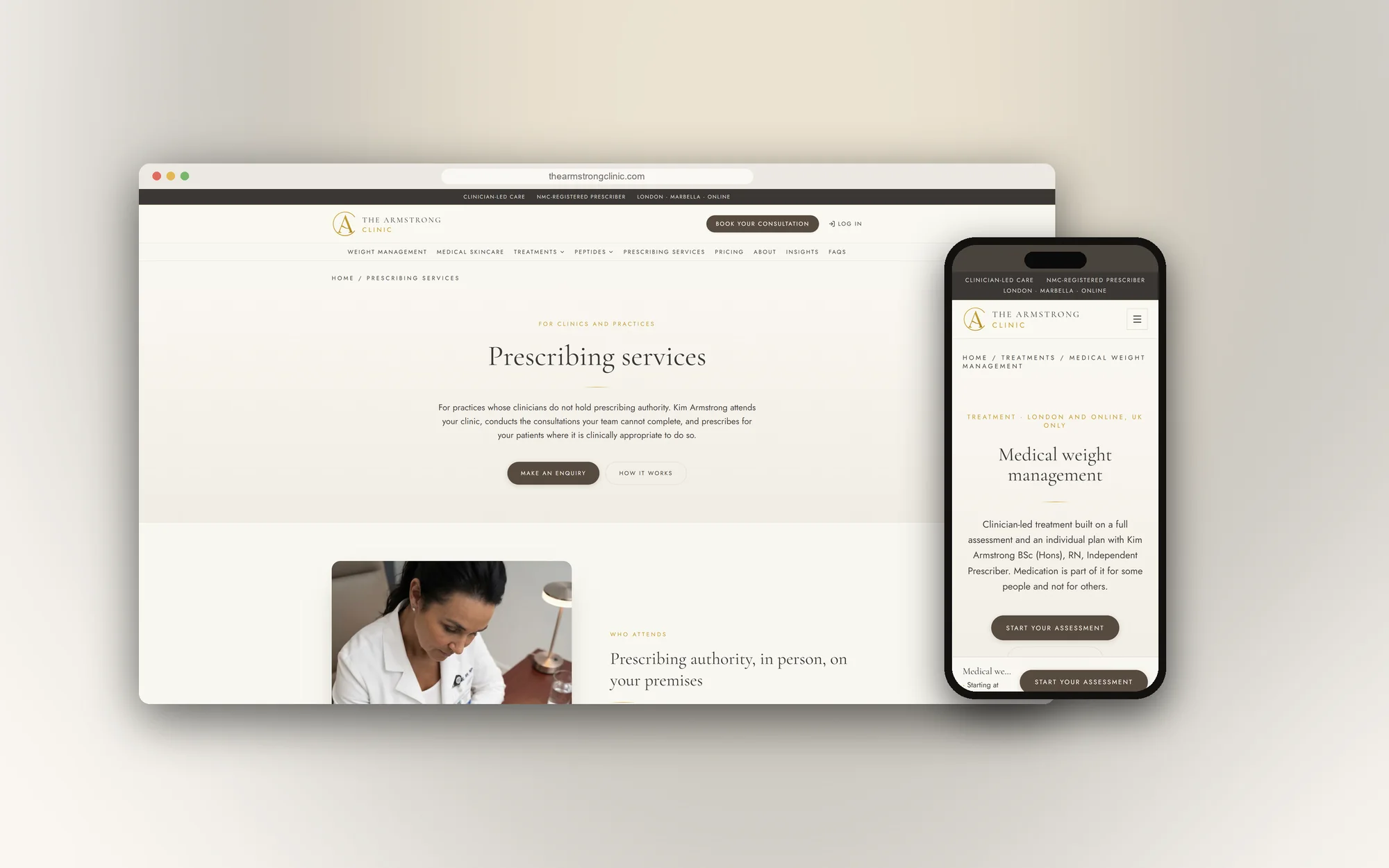
The outcome
A single clinician, with the infrastructure of a clinic group.
The Armstrong Clinic looks like what it is: a calm, private, clinician-led practice. What a patient never sees is the system that makes that possible for one person to run. Four services with four different shapes, two diaries that respect each other, a prescribing partner that receives clean data instead of retyped data, and a portal that lets other clinics buy her time without a single email.
Payments, product ordering and refunds run through Stripe. Patients hold their bookings, skincare plan and invoices in one account. Kim sees everything from one admin panel, and the rules that matter clinically are written down in code, tested, and enforced where they cannot be bypassed.
That is the point of building it properly. Not more features for their own sake, but a practice where the clinical decisions stay with the clinician, and everything else simply works.
Start the conversation
Let's discuss your project.
Share your goals and challenges. We'll respond within one working day.
What happens next
We'll review your message and respond within one working day.
We'll arrange a short call to understand your goals.
You'll receive a clear recommendation, not a generic proposal.
Work that
speaks for itself.
Every project is built with precision. See what we've delivered for businesses like yours.
See our other work