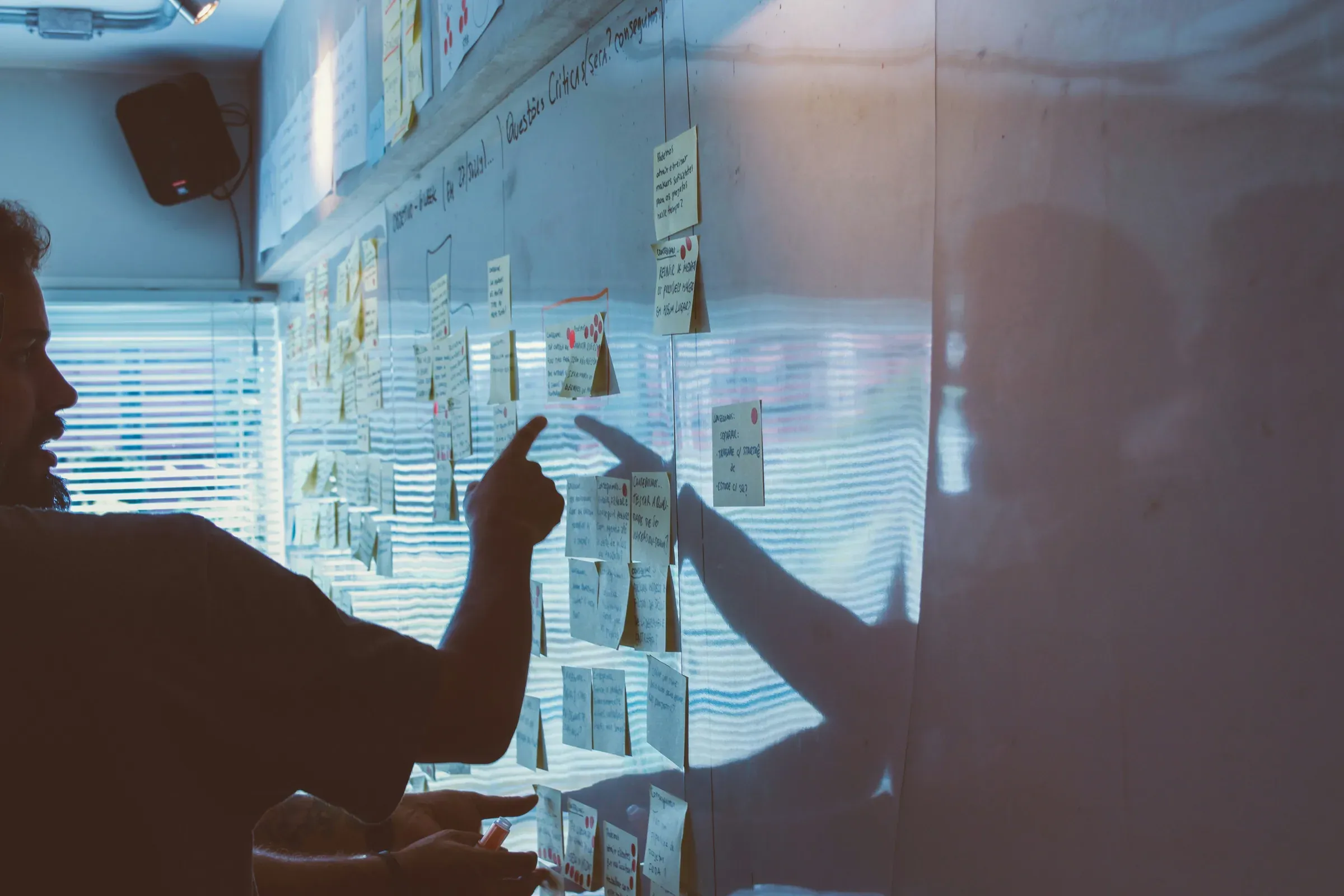
The mistake almost everyone makes is treating execution as the high-leverage phase. It isn't. By the time a project reaches development, most of the critical decisions have already been made, or avoided. The quality of what gets built is almost entirely determined by the quality of what gets defined before it.
Projects fail at the thinking stage
Most digital failures aren't technical. The code ran fine. The design was competent. The delivery was on time. But the product didn't work, because it was built on assumptions instead of understanding. Assumptions about what users need, what the business actually does operationally, what success looks like at twelve months instead of twelve weeks. These aren't execution problems. They're thinking problems. And they're invisible until after the launch.
"Most digital projects fail in the brief, not the build."
Misalignment between business model and digital structure
Your digital structure should mirror how your business actually creates value. If you're a service business that requires consultation before quoting, your site shouldn't be structured like a product page. If your clients need to trust you before they engage, your site shouldn't lead with a pricing table. The most common failure mode is importing a structure from a business with a different model, copying how competitors look without asking why they're built that way. The result is a digital experience that's structurally dishonest about how the business works.
The danger of building before defining operational reality
Operational reality is what actually happens: how enquiries are handled, how decisions get made, where delays occur, what information the business genuinely needs from a user and when. Most digital briefs skip this entirely. The result is a product built on an idealised version of the business that doesn't match how it runs on a Tuesday. Systems built on false assumptions create friction at the exact moment it matters most, when a real user encounters a real edge case.
"A system that fits the pitch but not the process will fail in production."
Why discovery is the highest-leverage phase
Discovery, the phase where you ask questions instead of building answers, is where most value is created or destroyed. Not because discovery produces deliverables, but because it produces understanding. And understanding is what determines whether what gets built is correct, not just functional. Every hour spent clarifying inputs before execution saves multiples of hours correcting outputs after it. This is not a slow-down. It's the fastest path to something that actually works.
The role of constraints in high-performance systems
Constraints are not limitations. They're precision instruments. Knowing what a system cannot do, what it won't support, what it won't try to be, is what makes it good at what it should do. The most performant digital products are built around a clearly defined set of constraints. What they've refused to accommodate is as important as what they've included. That clarity comes from the thinking phase, not the build phase. You cannot retrofit good constraints.
"Clarity of inputs determines quality of outputs. Every time."
This is why the first thing we do at Reforma is understand, not quote, not propose, not pitch. We ask questions that most briefs never reach. About the operational reality of the business, about where the actual friction lives, about what success genuinely requires. Only then do we build. It's slower at the start. It's faster at the finish.
See how deep operational understanding shaped the Classic Towing enterprise system, built only after we understood exactly how the business ran, where the friction lived, and what the team actually needed.
Start the conversation →